Punta Cana Without an All-Inclusive Resort
Punta Cana is known for all-inclusive resorts, but they’re not the only way to go. Here are the alternatives, and who each one suits.
Last updated:
Why skip the all-inclusive?
All-inclusives make sense when you want every meal, drink and activity handled in one place. People look elsewhere when they:
- don’t drink much, or eat light, and would be paying for what they don’t use
- want to try local restaurants instead of resort buffets
- need more space: a kitchen, a living room, or somewhere to work
- are staying longer than a week
- want resort facilities occasionally rather than every day
Your options
1. Traditional all-inclusive (the baseline)
One price covers your room, food, drinks and most on-site activities. You rarely need to leave. The trade-offs are less flexibility and paying for the full package whether you use it or not.
2. Boutique or room-only hotel
Smaller hotels, often in Bávaro or Los Corales, sell rooms with breakfast or no meals at all. They’re good if you want hotel service without the all-inclusive model, and they tend to be close to independent restaurants.
3. Condo in a resort community
Punta Cana has many condo developments with shared pools, security and sometimes beach clubs. Cap Cana, Cana Bay and parts of Bávaro are common choices. You get resort-style surroundings with a kitchen and more space.
4. Apartment
Similar to a condo, usually booked through platforms like Airbnb. The quality ranges widely, so read the listing and reviews carefully. Look at the exact location, the pool setup and what "beach access" actually means (walking distance, shuttle, or a paid beach club).
5. Villa
Villas are best for groups and families. Many have a private pool, and some come with staff or a cook. They often sit in gated areas like Cap Cana, Punta Cana Resort & Club or Cocotal.
Practical things to plan
- Transport: Punta Cana is spread out. Price transfers or a rental car before you book somewhere remote.
- Groceries: check how far the nearest supermarket is. Stock up on day one.
- Beaches: beaches are public, but getting there from inland condos may mean a drive or a paid beach club.
- Resort days: many resorts sell day passes subject to availability. See our Hard Rock day pass guide for one example.
- Water: drink bottled or filtered water, as most locals and visitors do.
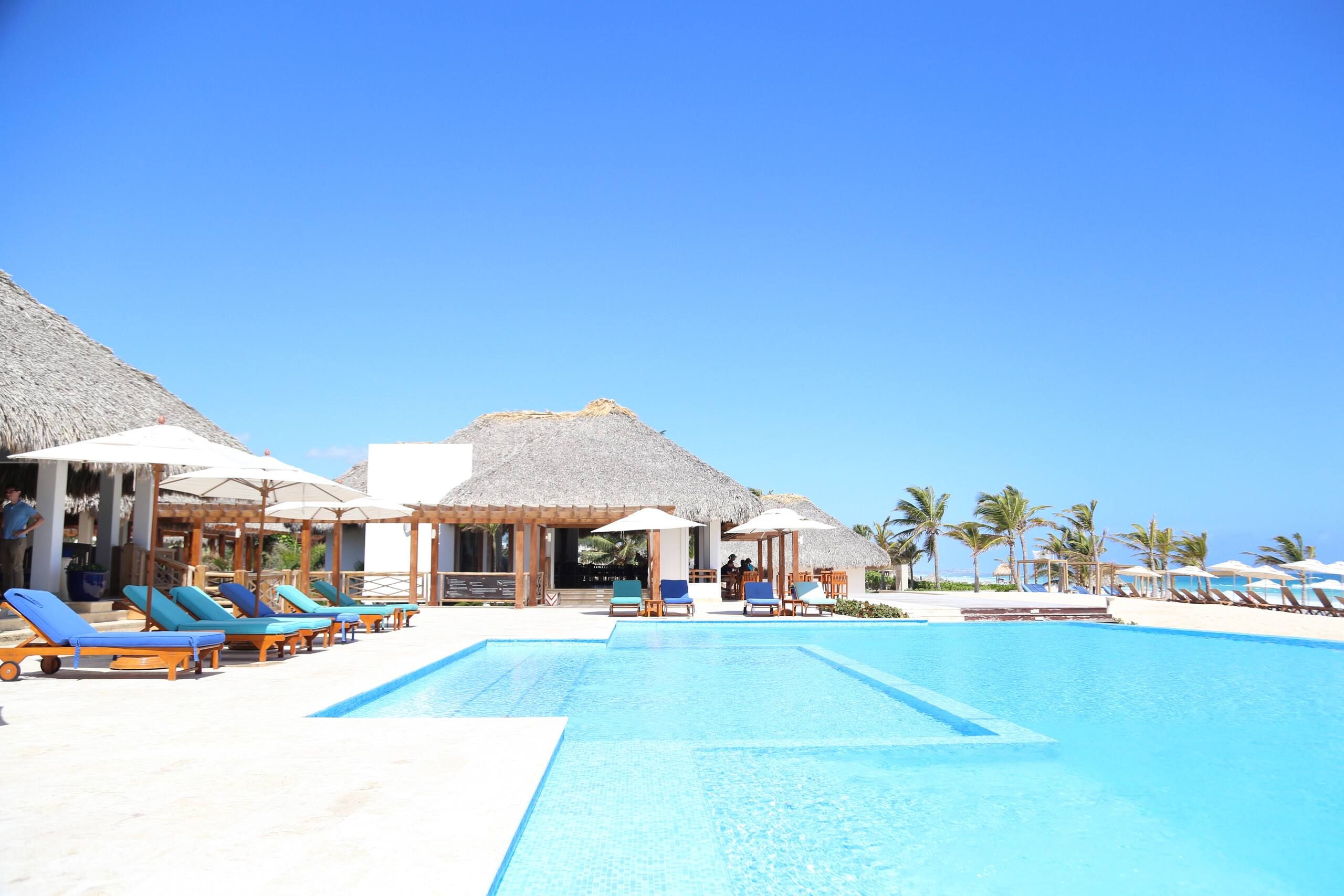
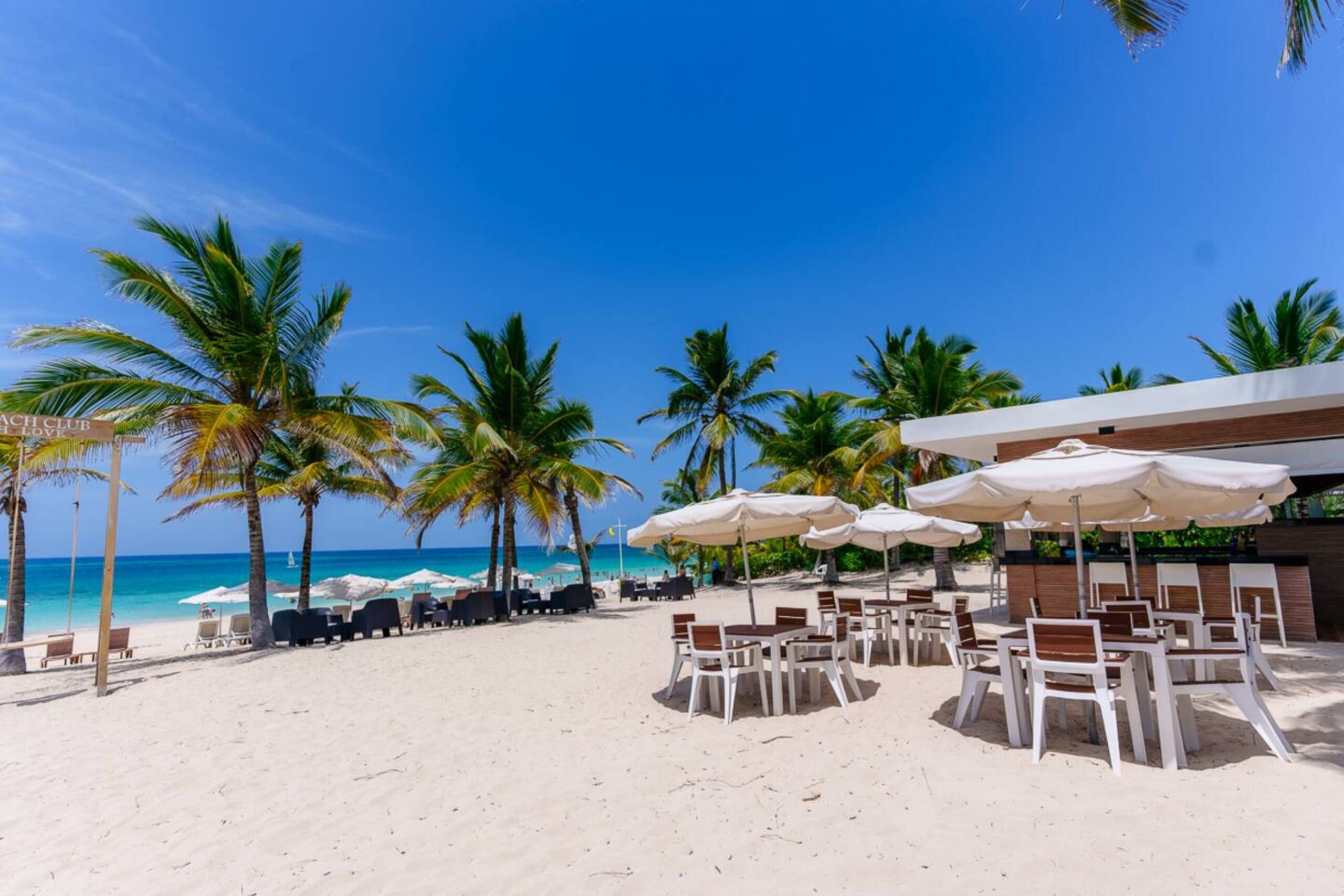
For a breakdown by area, see where to stay in Punta Cana.
A middle ground: resort area, independent stay
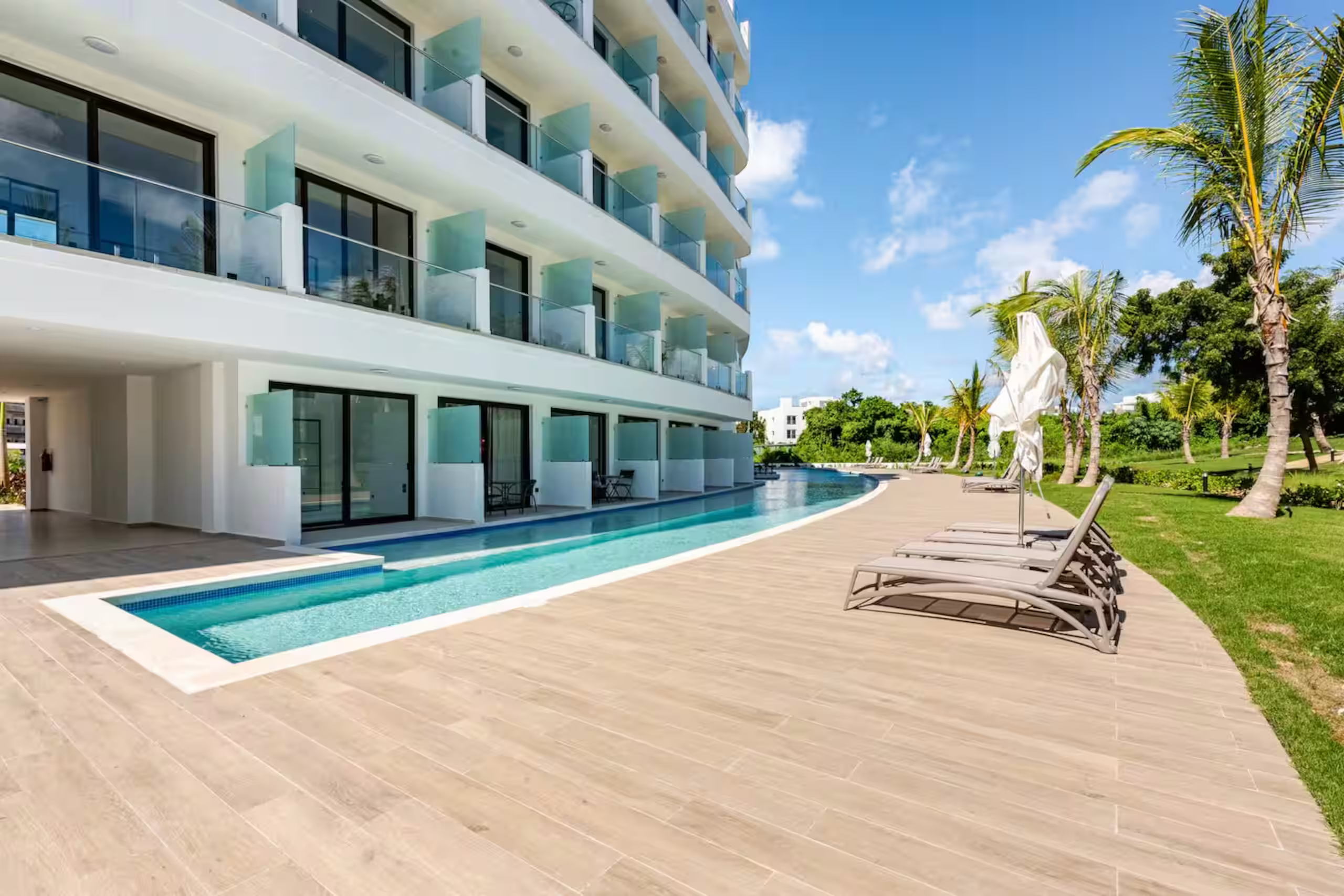
Some travellers want the resort atmosphere without the resort package. Staying in a condo or apartment inside a resort community gets you close. Our apartment is one example: it’s in Cana Bay, next to Hard Rock Punta Cana and its golf course, and its terrace opens directly onto the pool. You cook when you want and buy a Hard Rock day pass only if you want one.
Frequently asked questions
Is Punta Cana worth it without an all-inclusive?
Yes, for many travellers. Beaches in the Dominican Republic are public by law (though getting onto them can mean crossing private land or paying for a beach club), supermarkets and restaurants are easy to find in areas like Bávaro, and many condo communities have pools. You do need to plan transport and meals.
Where should I stay in Punta Cana if I don’t want all-inclusive?
Bávaro and Los Corales are the easiest for walking to restaurants. Cap Cana and Cana Bay suit people who want a resort-style setting with a condo or apartment.
Is it cheaper to stay in an apartment than an all-inclusive in Punta Cana?
Sometimes. It depends on dates, how much you eat and drink, and which paid activities you add. Compare full trip totals, not just nightly rates.
Do I need a car without an all-inclusive?
Not always, but it helps. Taxis and transfers are widely available; a rental car gives more freedom if you plan to explore or stay outside walkable areas.